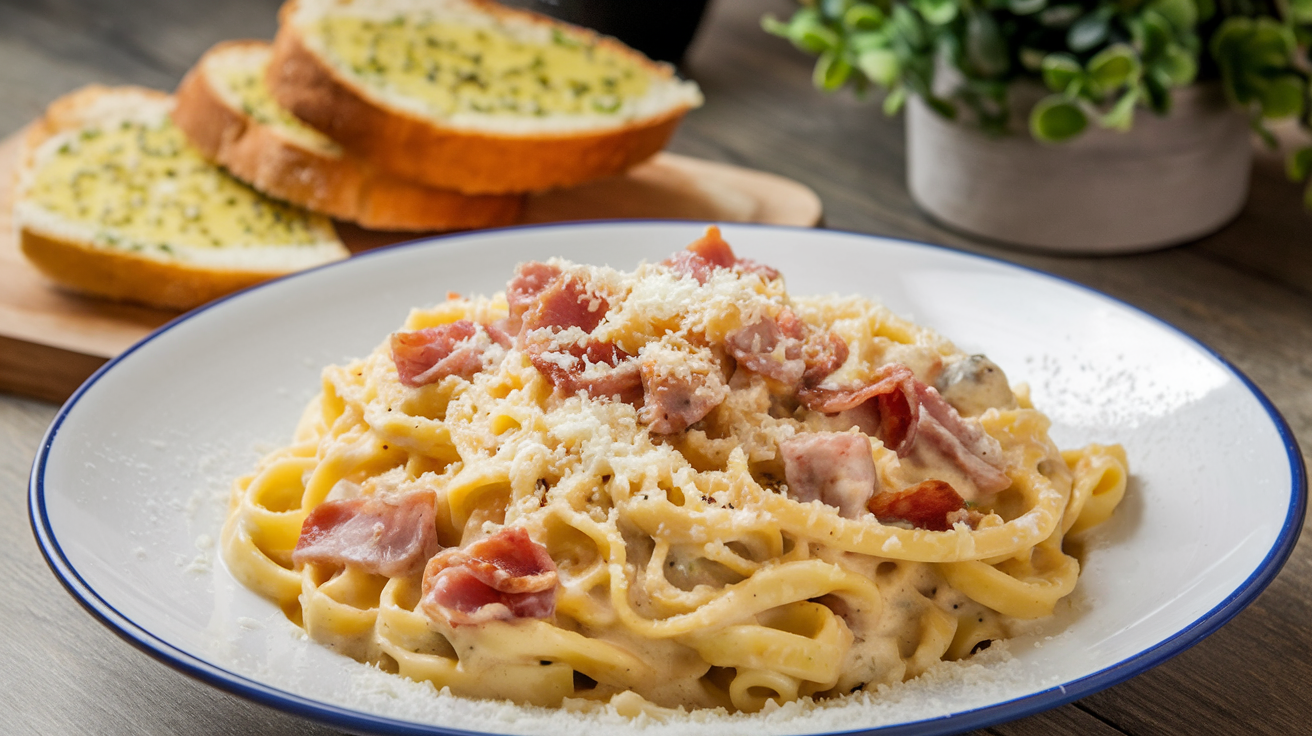
Pasta Carbonara: A Comfort Food Classic
If I had a euro for every time someone asked me, “So, what’s the secret to real pasta carbonara?” — I’d be sipping espresso in Rome right now instead of typing this. Pasta carbonara isn’t just a recipe. It’s comfort food royalty. It’s that magical mix of silky egg sauce, salty pork, al dente pasta, and a snowstorm of cheese that instantly makes life better — even if your phone’s about to die at 3%.
My obsession started years ago in a tiny Roman trattoria. One forkful of spaghetti carbonara and I had my “lightbulb moment.” IMO, once you’ve had the real deal, the jarred “carbonara sauce” at the supermarket feels like a bad knockoff handbag. Sure, it exists, but you just… shouldn’t.
If you want to nail authentic pasta carbonara at home — the creamy, glossy, non-scrambled kind — you’re in the right place. We’re going to talk ingredients, technique, tips, mistakes to avoid, and even what wine to drink with it. And yes, I’ll even tell you how to tweak it without getting side-eyed by an Italian nonna.
What Is Pasta Carbonara?
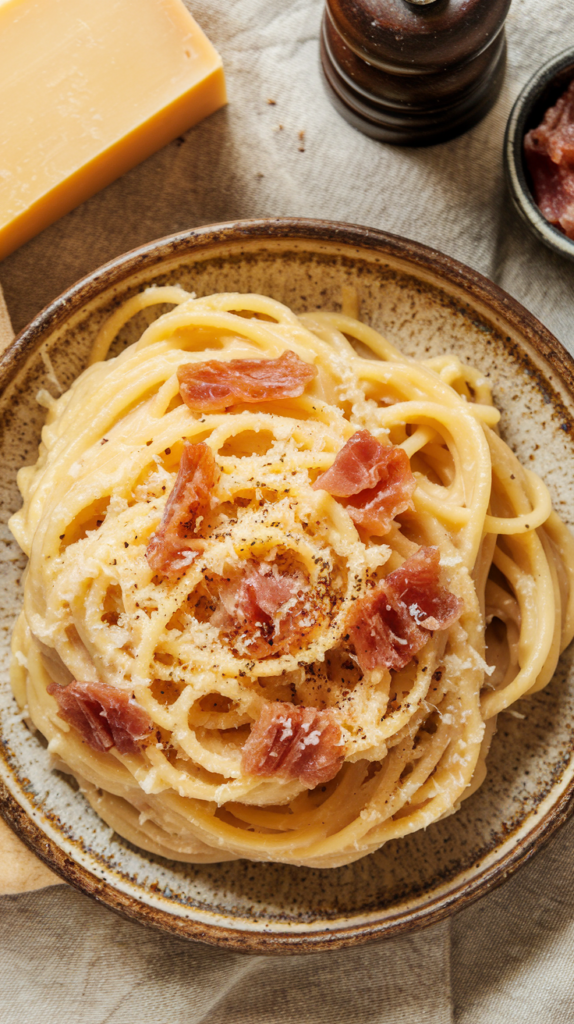
In its purest form, pasta carbonara is a traditional Roman dish with just a handful of ingredients:
- Pasta (spaghetti is the poster child, but bucatini or rigatoni work too)
- Eggs (yolks only or whole eggs, depending on tradition)
- Pecorino Romano cheese
- Guanciale (cured pork cheek)
- Freshly cracked black pepper
No cream. No onions. No garlic. And for the love of pasta, no peas. The sauce comes from the emulsion of eggs, cheese, and rendered pork fat, creating that iconic glossy coating.
Ever wondered why it works so well? It’s the culinary equivalent of a three-piece band that sounds like a full orchestra — a few simple players, perfectly in sync.
A Tiny Bit of History
I promised to keep this short. “Carbonara” likely comes from carbonaro (charcoal burner). Some believe it was a hearty dish for Italian coal miners. Others think it became popular post–World War II when American soldiers brought bacon and powdered eggs to Italy.
Either way, Rome claimed it, fine-tuned it, and made it a staple. And the rest of us have been shamelessly copying it ever since.
Golden Rules for Perfect Pasta Carbonara
Here’s how to avoid the tragic scrambled-egg situation:
1. Pick the Right Meat
Guanciale is king. It has a rich, fatty flavor that pancetta just can’t beat. If you must use bacon, go for thick-cut and unsmoked.
2. Use Pecorino Romano
Its sharp, salty bite balances the richness. Parmigiano-Reggiano works in a pinch but will taste milder.
3. Cook Pasta in Salty Water
If your pasta water doesn’t taste like the sea, it’s not salty enough. Bland pasta = bland carbonara.
4. Toss Off the Heat
The biggest mistake? Adding the egg mixture over direct heat. That’s how you get scrambled eggs. Toss everything together in the residual warmth of the pasta and pan.
5. Use Pasta Water Wisely
Reserved pasta water is your best friend. It helps create that silky sauce without thinning it too much.
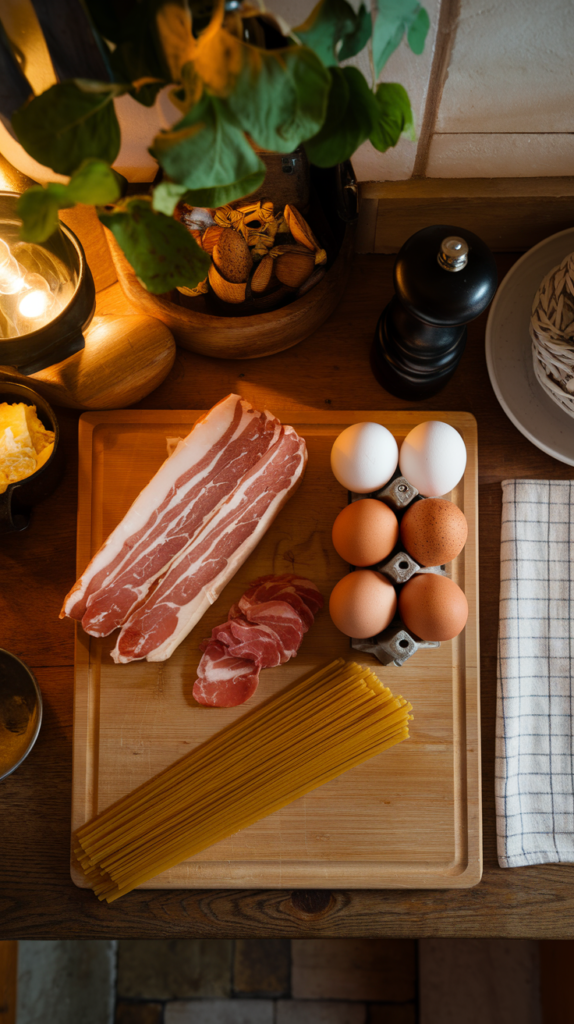
Ingredients for 4 Servings
- 400g spaghetti (or bucatini/rigatoni)
- 150g guanciale (or pancetta)
- 3 large eggs + 1 yolk
- 100g Pecorino Romano cheese (finely grated)
- Freshly cracked black pepper
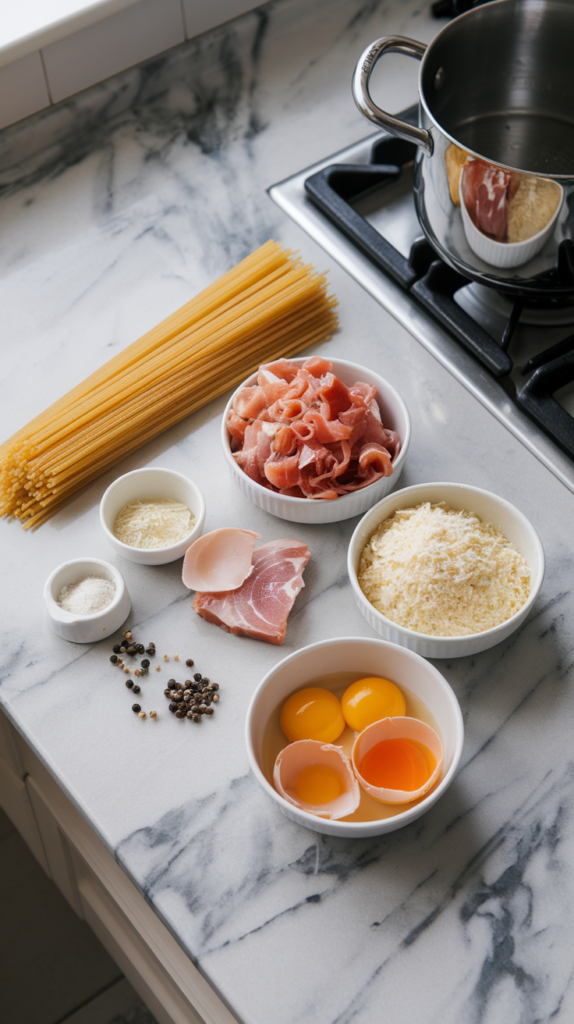
Step-by-Step Method
Step 1: Boil the Pasta
Big pot. Rolling boil. Salty water. Drop in your pasta and cook until just shy of al dente — it’ll finish cooking in the sauce.
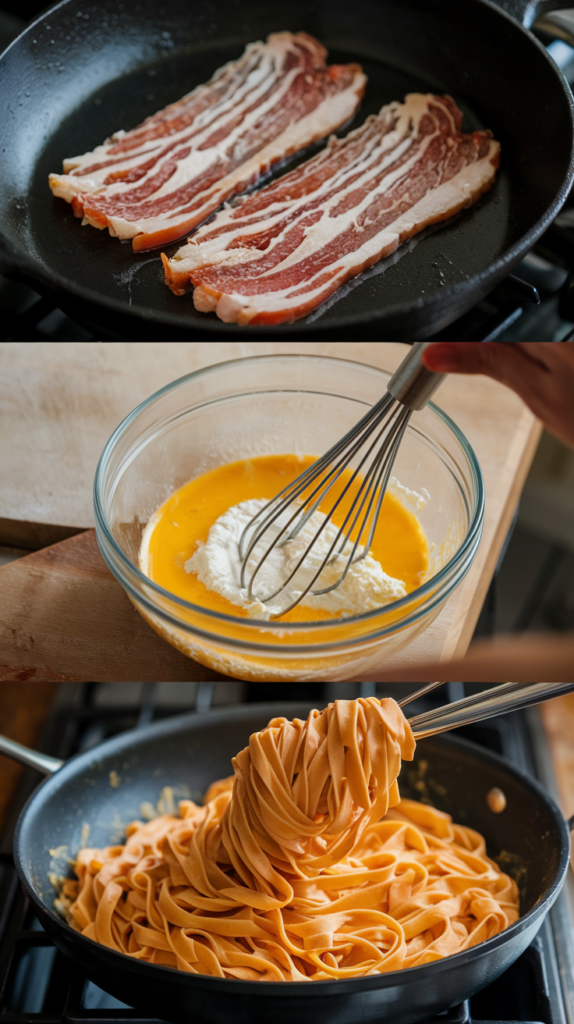
Step 2: Crisp the Guanciale
Cut into thick lardons. Fry slowly over medium heat so the fat renders out. Don’t rush it — crispy edges and golden fat are the goal.
Step 3: Mix the Sauce
Whisk eggs, yolk, Pecorino, and a good hit of black pepper. It should be a thick paste. This ensures a creamy, clinging sauce.
Step 4: Combine Like a Pro
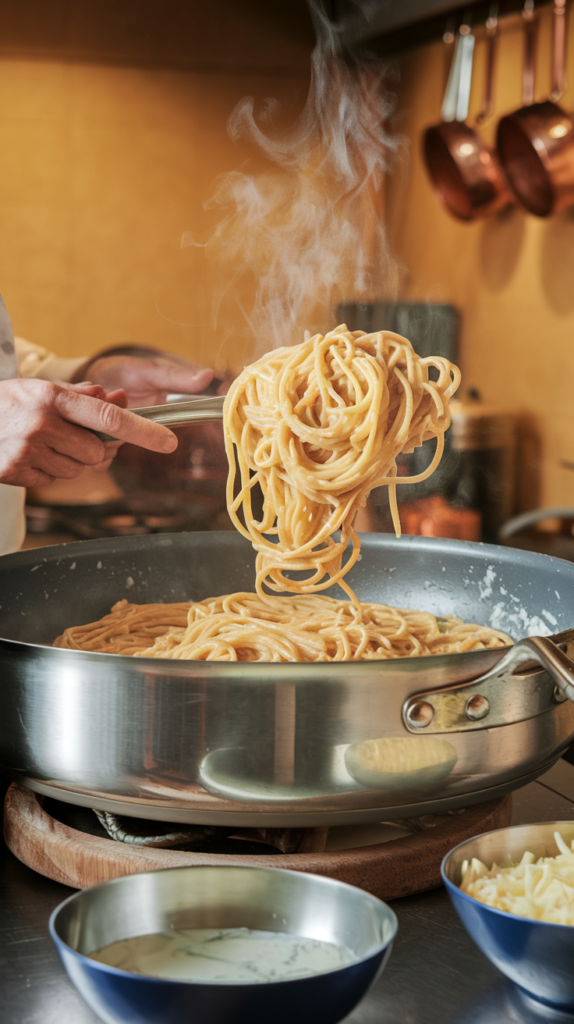
Drain pasta (reserve about a cup of cooking water). Toss pasta with guanciale in the pan, remove from heat, and stir in the egg-cheese mixture. Add splashes of pasta water until glossy.
Step 5: Serve and Devour
Top with more Pecorino and pepper. Eat immediately. Resist the urge to “just take a photo” while it’s hot — this is not a waiting game.
Extra Cooking Tips for the Perfect Carbonara
Want to go from “pretty good” to “wow, this could be in Rome”?
- Warm the bowl → If you’re serving in a cold dish, you’re losing heat. Warm plates keep the sauce glossy longer.
- Use room-temperature eggs → Cold eggs can shock the pasta and cause lumps.
- Grate cheese finely → The finer the grate, the smoother the sauce.
- Don’t over-pepper → Yes, pepper is key, but you want balance, not a sneeze attack.
- Taste before seasoning → Between guanciale and Pecorino, you might not need extra salt.
Troubleshooting Carbonara
Problem: Sauce looks dry
Fix: Add a little more pasta water and toss vigorously.
Problem: Sauce scrambled
Fix: You added eggs over too much heat. Pull the pan off sooner next time.
Problem: Sauce too thin
Fix: You used too much water or not enough cheese. Add more Pecorino and toss.
Problem: It tastes flat
Fix: You skimped on pepper or used bland cheese. Upgrade your ingredients.
Fun Twists That Still Work
Purists might roll their eyes, but here are tweaks that respect the original:
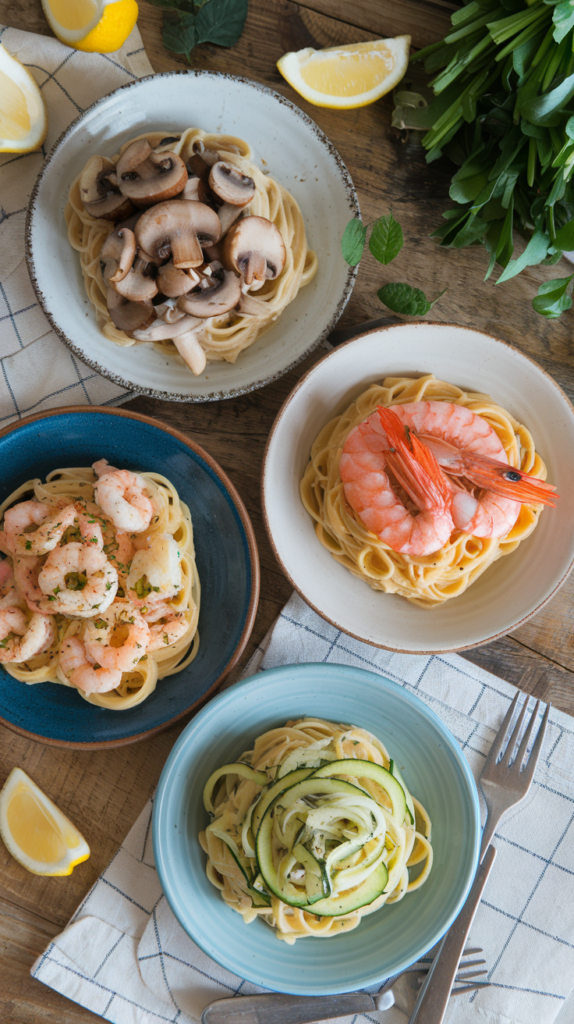
- Mushroom Carbonara → Add sautéed mushrooms for earthy depth.
- Seafood Carbonara → Swap guanciale for shrimp or scallops.
- Zucchini Carbonara → Thin slices cooked in guanciale fat for a lighter touch.
- Mixed Cheese Carbonara → A blend of Pecorino and Parmigiano for more complexity.
What to Serve with Pasta Carbonara
Carbonara is rich, so pair it with lighter sides:
- Simple green salad with lemon vinaigrette
- Roasted asparagus with olive oil
- Fresh bread to mop up any sauce
Wine & Drink Pairings
A good pairing makes the dish sing:
White Wines
- Pinot Grigio → Crisp and light
- Verdicchio → Bright acidity to cut the richness
Red Wines
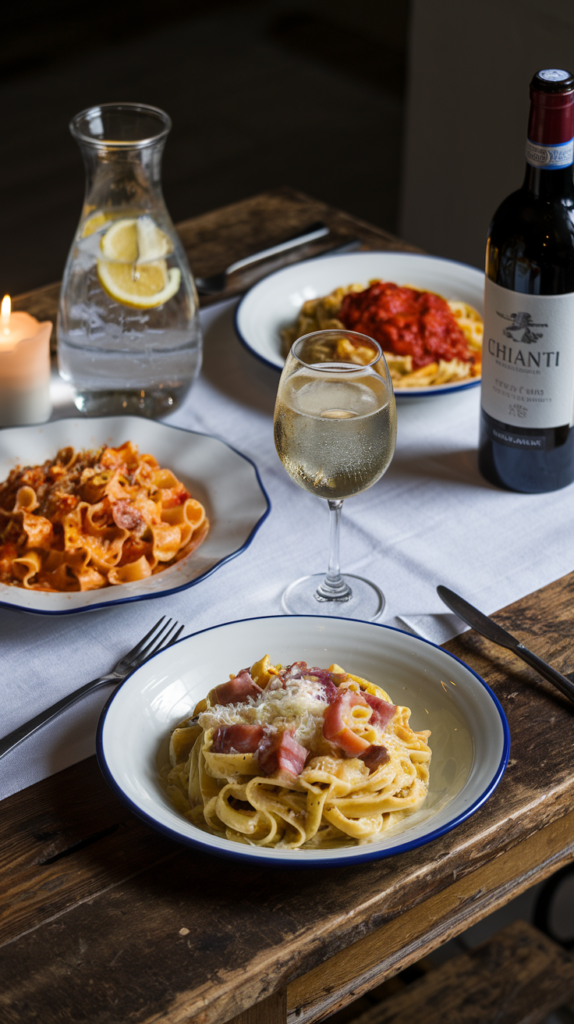
- Chianti → Light-bodied with a bit of earthiness
- Barbera → Juicy and versatile
Non-Alcoholic
- Sparkling water with lemon → Refreshing and palate-cleansing
- Iced tea → Unsweetened works best
The Joy of Cooking Carbonara at Home
There’s something deeply satisfying about making carbonara from scratch. You control the texture, the seasoning, and the quality of ingredients. Plus, it’s ready in under 20 minutes — faster than delivery, and infinitely more satisfying.
And here’s the thing: you don’t have to be a pro chef to get it right. You just need patience, good ingredients, and the willingness to whisk eggs like you mean it.
Final Thoughts
Pasta carbonara is proof that you don’t need 20 ingredients to create something unforgettable. When you respect the basics — quality pasta, fresh eggs, Pecorino, guanciale, and pepper — you get a dish that’s more than the sum of its parts.
So the next time you’re craving comfort, skip the jarred sauces and go full Roman. Just remember: toss off the heat, don’t drown it in cream, and enjoy it while it’s hot.
And if someone asks for peas in their carbonara? Well… maybe just make them a salad instead. 🙂